
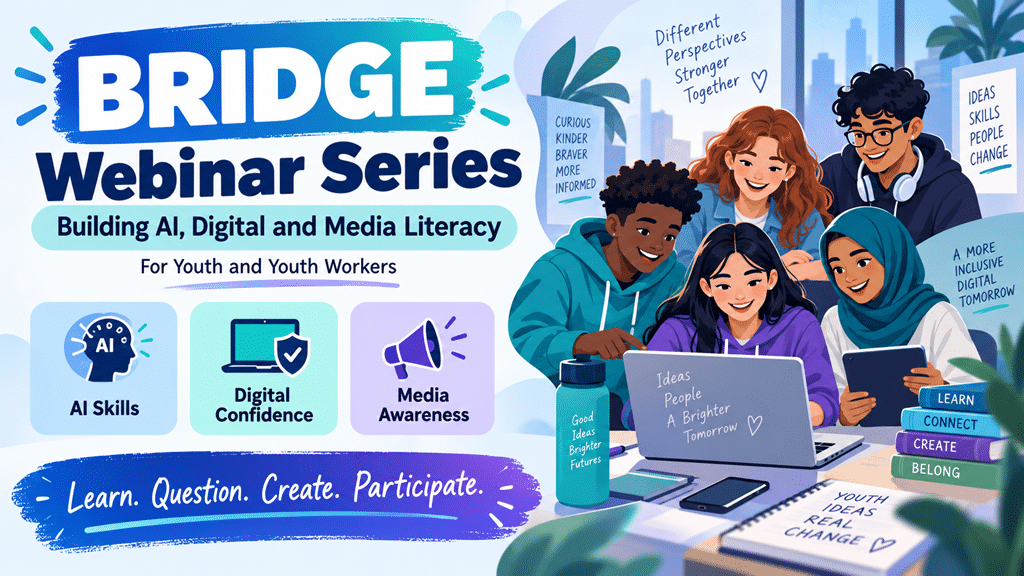
How can we use Artificial Intelligence more confidently? How can we recognise unreliable information online? And what skills do we need to navigate an increasingly digital world responsibly?
As part of the B.R.I.D.G.E. Erasmus+ project, a new series of five online webinars will explore these questions through practical sessions covering AI literacy, digital skills, media analysis, ethical technology use and misinformation.
The webinars form part of a wider programme designed to strengthen digital literacy and critical thinking among young people and adults while creating opportunities for learning, participation and intergenerational dialogue.
About the B.R.I.D.G.E. Project
B.R.I.D.G.E. is a 24-month Erasmus+ project running from 1 August 2026 to 31 July 2028.
The project builds on the long-standing cooperation between Youth Vision and HESL, which has developed since 2017.
BRIDGE focuses on empowering young people, strengthening digital competences and supporting meaningful participation, with particular attention to young people with fewer opportunities.
Digital literacy is at the centre of the project. Participants will explore topics including Artificial Intelligence, online safety, media literacy, digital manipulation, critical thinking, responsible content creation and misinformation.
The wider project will involve young people and adults through training activities, workshops, youth participation events, mobilities, awareness campaigns, advisory activities and intergenerational dialogue.
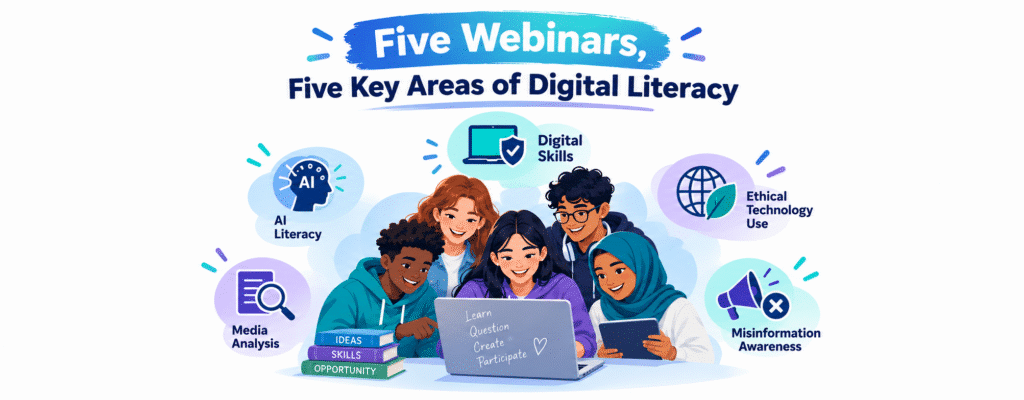
Five Webinars, Five Key Areas of Digital Literacy
The BRIDGE webinar series consists of five 1.5-hour online sessions, with each webinar focusing on a different aspect of digital competence.
Webinar 1: Introduction to AI Literacy
What is Artificial Intelligence and how does it actually work?
The first webinar introduces participants to the fundamentals of AI and explores how AI-powered systems use algorithms and data.
Participants will look at everyday examples of AI and consider how these technologies are influencing areas such as communication, education and employment.
The objective is to provide participants with the foundational knowledge needed to understand AI-powered technologies rather than simply use them.
Topics include: Artificial Intelligence basics, algorithms, data, everyday AI applications and the potential impact of AI on future careers.
Webinar 2: Digital Skills for the Modern World
Digital competence is not only about knowing how to use technology. It also involves working efficiently, communicating effectively and protecting yourself online.
This webinar will introduce useful digital platforms and cloud-based tools while covering essential online security practices such as safe browsing and password management.
Participants will also explore tools that can support project organisation, communication and collaboration.
Topics include: digital platforms, cloud services, online communication, cybersecurity basics, password management, productivity and collaboration.
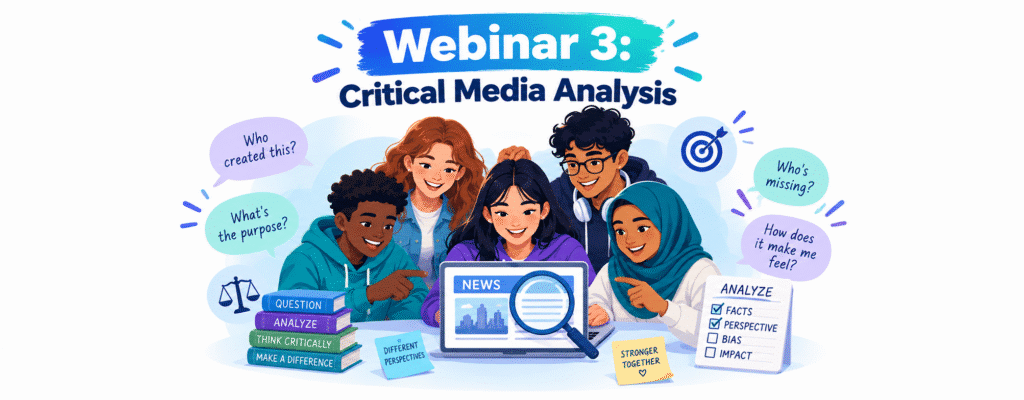
Webinar 3: Critical Media Analysis
With large amounts of information reaching us every day, knowing how to assess the credibility of what we read and watch has become increasingly important.
This webinar will introduce participants to practical techniques for analysing media content.
Participants will explore how to evaluate sources, recognise different forms of framing and bias, identify persuasive techniques and use fact-checking resources to investigate questionable information.
Topics include: source credibility, media bias, framing, propaganda, verification and fact-checking.
Webinar 4: Ethical Technology Use
Technology can create opportunities, but its use also raises questions about privacy, data and responsibility.
The fourth webinar will examine some of the ethical considerations connected with digital technologies and Artificial Intelligence.
Participants will explore issues including privacy rights, data protection, fairness and transparency, as well as the role digital technologies can play in access to information and democratic processes.
Topics include: technology ethics, responsible AI use, privacy, personal data, transparency and digital participation.
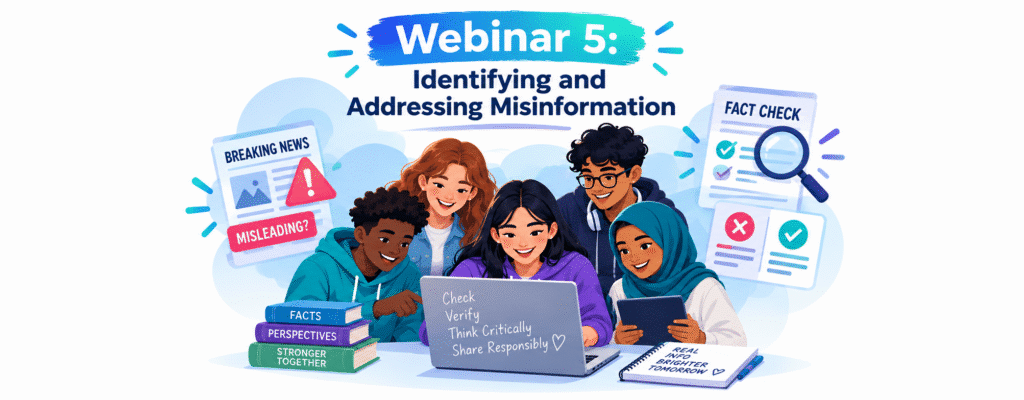
Webinar 5: Identifying and Addressing Misinformation
The final webinar will bring many of the skills developed throughout the series together.
Participants will learn how misinformation and disinformation can spread, examine some of the techniques used to make misleading information appear credible and practise strategies for verifying questionable claims.
Particular attention will be given to information connected with public debate and democratic processes, where checking sources, context and evidence can be especially important.
Participants will also explore tools that can help them verify and report misleading content responsibly.
Topics include: misinformation, disinformation, verification techniques, source checking, fact-checking tools and responsible responses to misleading content.
From Digital Users to More Informed Digital Participants
The five webinars are designed to complement one another.
Participants begin by understanding the technologies shaping the digital environment before developing practical digital skills, examining how online information is constructed and learning how to evaluate and verify what they encounter.
This reflects the wider goals of the BRIDGE project: not simply to introduce participants to digital tools, but to strengthen the critical thinking, digital awareness and responsible technology practices needed to navigate them effectively.
BRIDGE will also take this learning beyond the webinar series.
Throughout the project, young people will take part in workshops, training activities, mobilities, campaigns and youth participation initiatives. Intergenerational activities will additionally create opportunities for young people and adults to exchange experiences and learn from one another.
The project will contribute to the development of practical resources for both young people and adults, including guidance on AI literacy, responsible technology use and misinformation.
Follow the BRIDGE Project
The five webinars will take place as part of the BRIDGE project between 2026 and 2028.
Further information about individual webinar dates, registration and upcoming BRIDGE activities will be published as the project develops.
Interested in AI, digital literacy, media literacy and responsible technology use? Follow HESL for upcoming BRIDGE activities and webinar registration opportunities.