Course Description
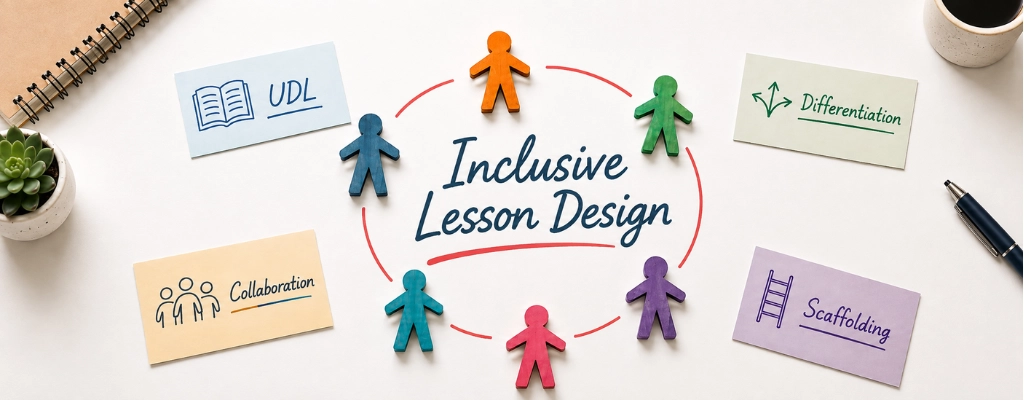
Our inclusive lesson design course combines Universal Design for Learning (UDL), differentiated instruction, scaffolding and collaborative learning within one practical planning framework.
The course supports teachers and education staff in anticipating learner variability before lessons begin. Participants learn to create accessible learning goals, flexible pathways, meaningful choices and structured peer-learning opportunities for diverse classrooms.
Participants will explore how to apply multiple means of engagement, representation and action and expression, differentiate content and process, select effective scaffolding strategies and design equitable group work.
The course empowers teachers to reduce barriers to learning while preserving challenge and curriculum alignment. This helps students access content, participate actively, work collaboratively and develop greater independence.
By the end of this inclusive instruction design course, participants will have produced a complete inclusive lesson sequence using AI that aligns objectives, UDL options, differentiation, scaffolds, collaboration and assessment.
The course is suitable for primary and secondary teachers, VET teachers, special education teachers, curriculum coordinators and school staff seeking Erasmus+ professional development in inclusive lesson design. It will be adapted to participants’ own subjects and teaching contexts.
Course Content
-
Learner variability and the foundations of proactive, inclusive instruction design
-
UDL principles: engagement, representation, and action and expression
-
Differentiating content, process, product, pace and support without reducing rigor
-
Visual, verbal, procedural and conceptual scaffolding with gradual release
-
Collaborative learning structures, flexible grouping and integrated lesson design
Learning Outcomes
At the end of the course delegates will be able to:
-
Explain how UDL, differentiation, scaffolding and collaboration complement one another
-
Identify barriers and learner variability within an existing lesson
-
Design flexible pathways toward common curriculum goals
-
Select and fade scaffolds that support access and learner independence
-
Create collaborative tasks with equitable participation and accountability
-
Produce an inclusive lesson sequence for classroom implementation
Assessment and Certificates
Assessment of performance will be through delegate-completed portfolio of work. The final course certification for successful completion is a college-issued “Course Certificate of Completion”, for each module studied. In addition, where applicable, delegates will receive relevant EuroPass certificates.