
Course Description
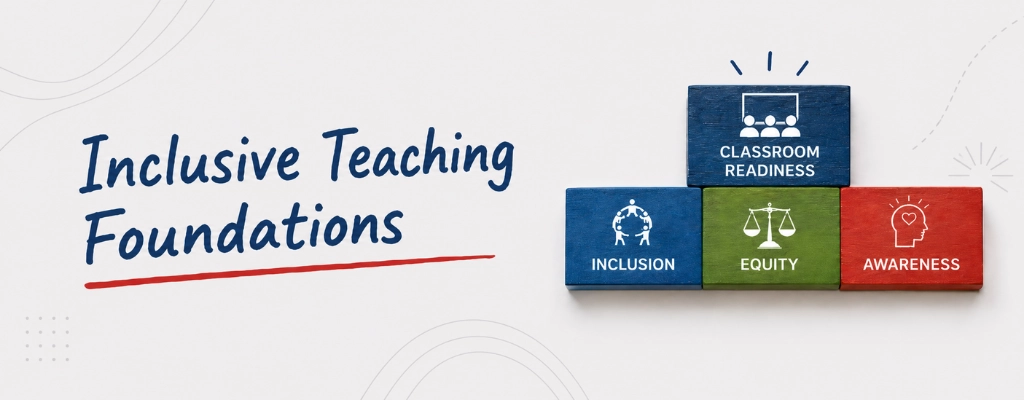
Our introductory inclusive education course for teachers introduces the principles of equity, access, participation and belonging, helping educators build the awareness and classroom readiness needed to include every learner.
The course supports teachers and education staff in connecting inclusive education policy with everyday classroom practice. Participants examine how routines, expectations, learning environments and school systems can widen or restrict opportunities for students.
Participants will explore how to recognise structural, instructional and attitudinal barriers, evaluate their current practice and create inclusive classroom strategies that respond to learner diversity without lowering expectations.
The course empowers teachers to strengthen student belonging, participation and confidence through equitable teaching practices, predictable routines and respectful relationships. This helps schools move from broad commitments to practical inclusion and diversity in the classroom.
By the end of this inclusive education course for teachers, participants will have gained a clear foundation in inclusive pedagogy, practical self-audit tools and an action plan for improving access, equity and classroom participation.
This course is suitable for primary and secondary teachers, special education teachers, school leaders, support staff and other professionals seeking an introductory Erasmus+ teacher training in inclusive education. Activities will be adapted to participants’ roles, age groups and school contexts.
Course Content
-
Core principles of inclusive education, equity, access, participation and belonging
-
Academic, social and emotional benefits of inclusive classrooms for all learners
-
Structural, instructional, environmental and attitudinal barriers to inclusion
-
Teacher awareness, professional responsibility and inclusive classroom readiness
-
Practical audits, peer reflection and action planning for school implementation
Learning Outcomes
At the end of the course delegates will be able to:
-
Understand the principles and purpose of inclusive education
-
Explain the relationship between equity, access, participation and belonging
-
Identify barriers that can exclude learners from classroom opportunities
-
Evaluate current teaching routines through an inclusive education lens
-
Apply practical strategies that strengthen participation and learner confidence
-
Create a realistic action plan for inclusive classroom and school practice
Assessment and Certificates
Assessment of performance will be through delegate-completed portfolio of work. The final course certification for successful completion is a college-issued “Course Certificate of Completion”, for each module studied. In addition, where applicable, delegates will receive relevant EuroPass certificates.