
Course Description
Our Erasmus+ UDL course for teachers introduces Universal Design for Learning as a proactive framework for planning lessons around learner variability. Instead of designing for an imagined average learner and adding accommodations afterwards, participants learn to anticipate barriers within goals, materials, methods, participation and assessment from the beginning.
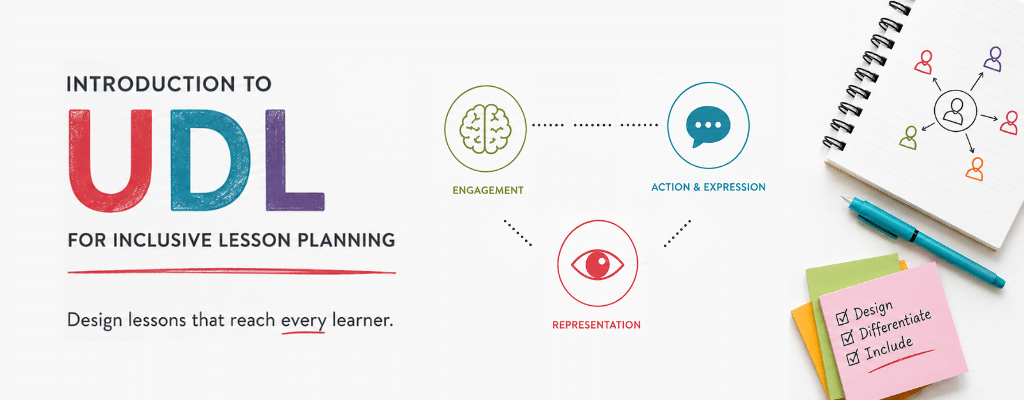
The course develops a practical understanding of the three UDL principles: multiple means of engagement, multiple means of representation, and multiple means of action and expression. Starting from UDL principles and benefits, teachers will carry out a lesson audit to examine their existing plan and identify where their lesson structure may decrease students' participation and learning before teaching even begins.
Participants will then engage in a practical deep dive into each of the three UDL pillars. They will be guided in redesigning their lesson with AI based on each principle.
At the end of the course, teachers will be able to combine the three UDL principles in a complete lesson plan with aligned goals, activities, resources, participation structures and assessment. Each participant will have a classroom-ready UDL lesson and a realistic implementation plan and evaluation plan.
Training combines concise input, barrier analysis, practical design workshops, lesson audits, peer consultation and final presentations. Participants document why each option has been included, which barrier it addresses and how they will evaluate its usefulness. This keeps UDL focused on purposeful design rather than simply increasing the number of activities or technologies.
The course is suitable for primary, secondary, vocational, adult-education and language teachers, special education professionals, curriculum coordinators, instructional designers and school leaders. It supports education staff seeking Erasmus+ teacher training in Universal Design for Learning, inclusive lesson planning, accessible materials and flexible assessment. Plans will be adapted to participants’ subjects, age groups, technology access and school contexts.
Course Content
- Introduction to Universal Design for Learning (UDL) principles and benefits
- Learner variability and barrier analysis within traditional lesson design
- Deep dive into the three UDL principles and their relationship to curriculum goals
- Flexible assessment options aligned with intended learning outcomes
- Complete UDL lesson design, peer review, implementation and evaluation planning
- AI use and prompting for lesson analysis and (re)design
Learning Outcomes
At the end of the course delegates will be able to:
- Explain the purpose and three principles of Universal Design for Learning
- Identify barriers within lesson goals, materials, methods, participation and assessment
- Plan multiple means of engagement that support motivation, belonging and agency
- Create complementary representation options for access and comprehension
- Use AI to support lesson design and restructuring
- Design valid ways for learners to act, communicate and demonstrate understanding
- Align UDL options with common learning goals and appropriate challenge
- Produce, present and implement a complete UDL-based lesson plan
Assessment and Certificates
Assessment of performance will be through delegate-completed portfolio of work. The final course certification for successful completion is a college-issued “Course Certificate of Completion”, for each module studied. In addition, where applicable, delegates will receive relevant EuroPass certificates.