
Course Description
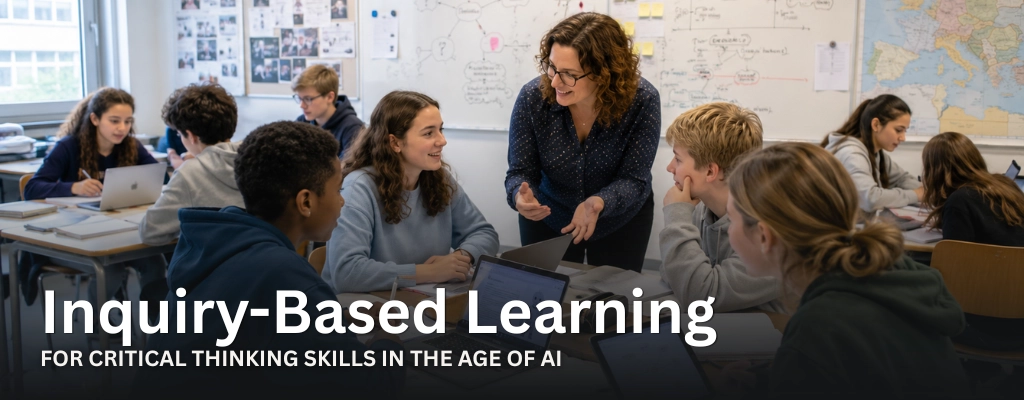
This course focuses on how to leverage inquiry-based learning methodology and AI in education to support student questioning, research, reflection, and presentation, while developing meaningful and student-centred learning experiences.
The course is best suited to secondary and VET teachers. It is particularly relevant for those interested in adopting Project-Based and practical classroom strategies for inquiry-based learning in their curriculum, with the aim to strengthen students' 21st-century competencies, including digital literacy, communication, creativity, collaboration, and problem-solving.
In the course, participants explore the foundations of Project-Based Learning and inquiry-based learning methodologies. Teachers will learn how to facilitate student-generated questions that encourage critical thinking, curiosity, collaboration, and deeper engagement.
Teachers will also learn how AI can support brainstorming, research, source evaluation, evidence gathering, note-making, reflection, and feedback.
Special attention is given to ethical AI use in education and strategies for teaching and evaluating AI-generated information critically.
Course Content
- Principles and implementation strategies of Project-Based Learning (PBL) and inquiry-based learning methodologies
- Integration of PBL and IBL in subject curriculum
- Strategies to support student-generated questions, critical thinking, collaboration, and deeper engagement
- AI prompting and teaching practices for brainstorming, AI-supported research, source evaluation, and note-making
- Ethical AI use in education and strategies for evaluating AI-generated information critically
Learning Outcomes
At the end of the course delegates will be able to:
- Apply Project-Based Learning and inquiry-based learning strategies in secondary and VET classrooms
- Facilitate student inquiry, curiosity, and student-generated questions to promote critical thinking and engagement
- Use AI tools in education to support brainstorming, research, reflection, collaboration, and presentation tasks
- Guide students in the ethical use of AI and critically evaluate AI-generated information and sources
- Design student-centred learning experiences that strengthen digital literacy, creativity, communication, collaboration, and problem-solving skills
Assessment and Certificates
Assessment of performance will be through delegate-completed portfolio of work.
The final course certification for successful completion is a college-issued “Course Certificate of Completion”. In addition, where applicable, delegates will receive relevant EuroPass certificates.