
Course Description
Our "English for Primary School Teachers: Teaching Early Literacy" course is designed for primary teachers who teach English to young learners and want to strengthen their approach to early reading, phonics, spelling and writing.
Participants will explore phonological and phonemic awareness, systematic phonics, vocabulary development, reading fluency, comprehension, spelling and early writing activities.
The programme combines methodology, classroom examples and practical activities that teachers can adapt directly to their own school context.
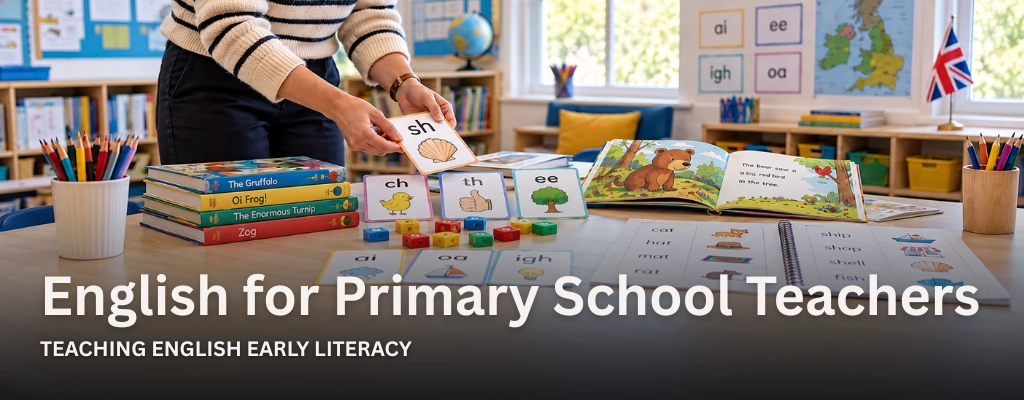
Throughout the course, participants will work with games, stories, picture books, flashcards, sound activities, word-building tasks and early reading materials. Special attention will also be given to supporting children who experience difficulties in learning to read and write in English, using multisensory and differentiated strategies.
Course Content
- Foundations of early English literacy: phonological and phonemic awareness
- Systematic phonics: letter-sound correspondence, blending, segmenting and decoding
- Spelling, word-building, early writing and vocabulary development
- Reading fluency and comprehension through stories, picture books and short texts
- Supporting struggling readers and planning practical literacy activities for children
Learning Outcomes
At the end of the course delegates will be able to:
- Understand the key stages of early English literacy development
- Distinguish between phonological awareness, phonemic awareness and phonics
- Plan practical activities to teach sounds, letters, blending and segmenting
- Support young learners in developing decoding and early reading skills
- Use stories, picture books and classroom routines to develop vocabulary and comprehension
- Design spelling, word-building and early writing tasks for children aged 6–9
- Apply multisensory and differentiated strategies to support children with reading and writing difficulties
- Create practical early literacy materials and activity sequences for their own classroom
Assessment and Certificates
Assessment of performance will be through delegate-completed portfolio of work. The final course certification for successful completion is a college-issued “Course Certificate of Completion”, for each module studied. In addition, where applicable, delegates will receive relevant EuroPass certificates.