
Course Description
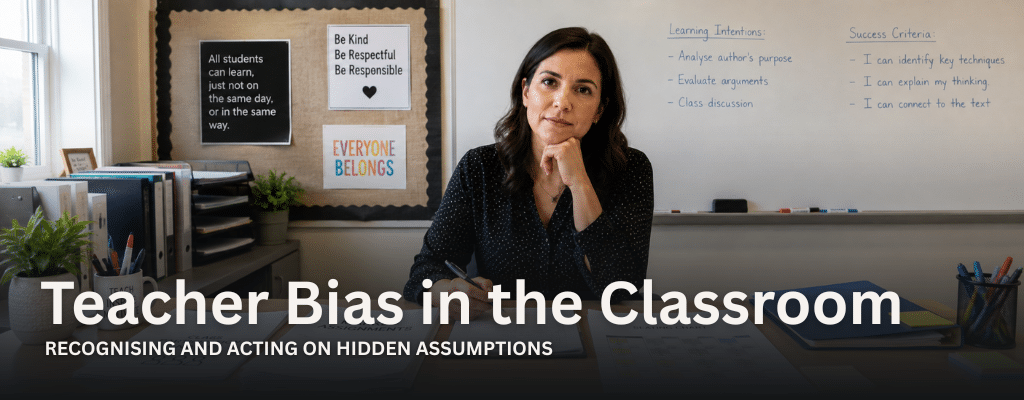
This Erasmus+ implicit bias training for teachers helps educators recognise how hidden assumptions can influence expectations, participation, discipline, feedback and access to classroom opportunities.
The course supports teachers and education staff in examining implicit and explicit bias through realistic educational scenarios. Participants consider how automatic judgments may affect students from different cultural, linguistic, gender and socio-economic backgrounds.
Participants will explore reflective routines, evidence-based decision-making and practical strategies for interrupting biased responses and keeping the classroom under control. Through role-plays, participants will practice real scenarios, applying strategies such as culturally responsive teaching, de-escalation and structural pivot.
Participants will also learn how to use AI ethically to analyse and practice responses for difficult classroom scenarios, supporting resilience training beyond the course.
The course empowers teachers to make classroom decisions more consistent, transparent and equitable. This helps students experience greater fairness, belonging, trust and confidence in their relationships with educators.
By the end of this implicit bias training for teachers, participants will have gained practical tools for recognising and acting on bias, changing classroom patterns to build a more inclusive classroom that supports learning.
The course is suitable for teachers, school leaders, counsellors, support staff and education professionals seeking Erasmus+ diversity and inclusion training. The course will be adapted to participants' school profile and needs.
Course Content
-
Implicit and explicit bias, stereotypes and hidden assumptions in education
-
Effects of teacher expectations on participation, discipline and achievement
-
Reflective routines and evidence for identifying decision-making patterns
-
Strategies for interrupting bias in language, feedback and classroom activities
Learning Outcomes
At the end of the course delegates will be able to:
-
Distinguish implicit bias, explicit bias, stereotypes and assumptions
-
Recognise how bias can influence everyday classroom decisions
-
Analyse participation, feedback and behaviour scenarios through an equity lens
-
Use evidence and consistent criteria to challenge first impressions
-
Apply practical strategies to build a more inclusive environment
Assessment and Certificates
Assessment of performance will be through delegate-completed portfolio of work. The final course certification for successful completion is a college-issued “Course Certificate of Completion”, for each module studied. In addition, where applicable, delegates will receive relevant EuroPass certificates.